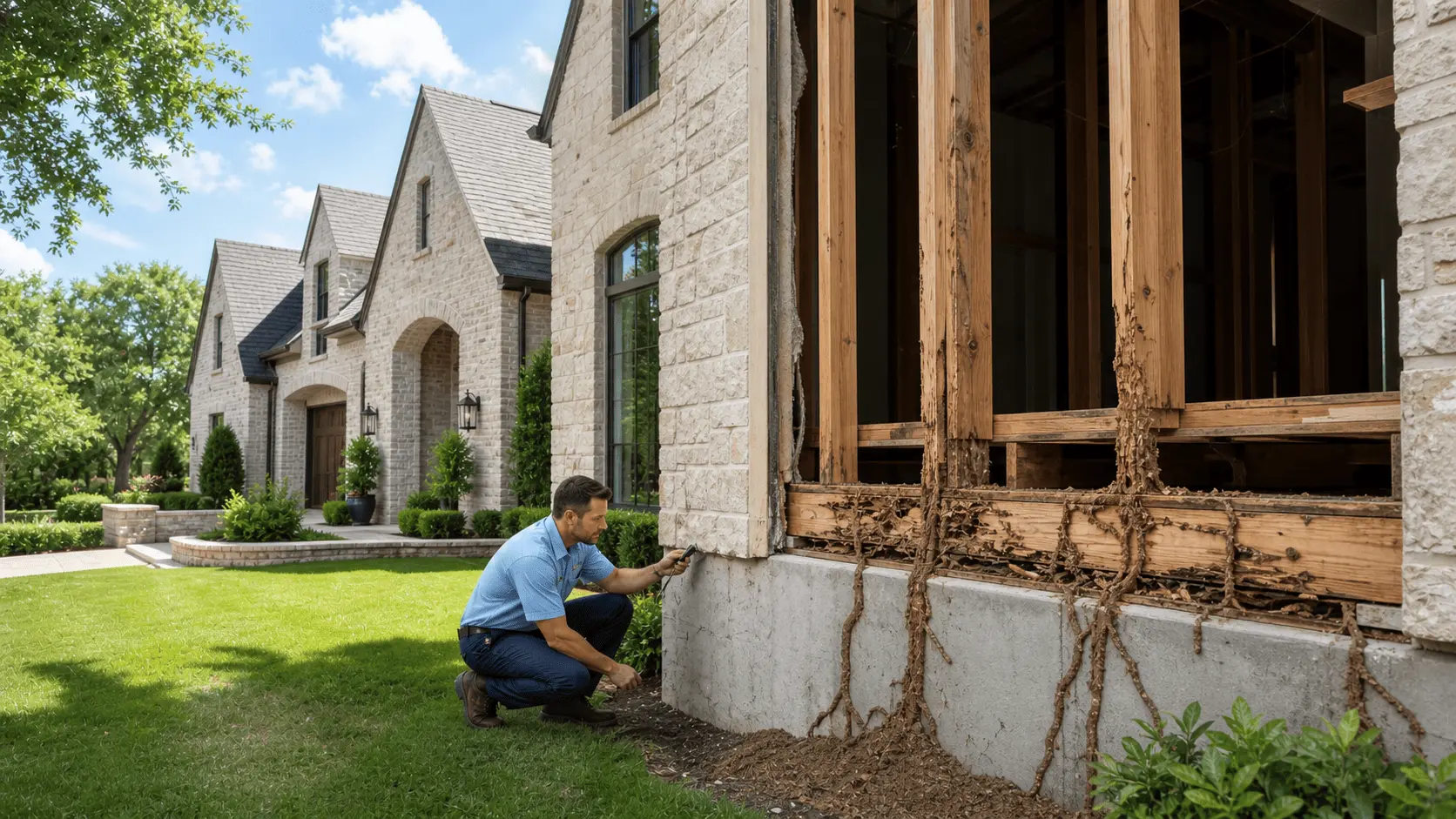
What Pest Is Most Damaging to a House?
All pests are annoying but some of them are just straightforwardly dangerous to your home. The difference between an ant in your kitchen and a termite in your wall is thousands of dollars and sometimes the structural integrity of your entire house. An interesting fact is that no standard homeowners’ insurance policy covers pest damage. The reason is that all damaging pests are considered preventable with routine maintenance. So, every dollar of damage comes directly out of your own pocket, making early detection and prevention exceedingly critical. Today, we discuss the most destructive pests, what to look for and what it costs if you miss them.
The Most Damaging Pests to a House
Termites
There is no second close to this pest. It is the silent destroyer that hollows your home from the inside out. Termites are the single most destructive pest a home can face. They feed on the organic material found in wood, drywall, insulation and wallpaper called cellulose and work around the clock in colonies that can number in the hundreds of thousands. Because they reside and work inside walls, it can take you years before you come to know about an infestation and by the time you start noticing the infestation signs, the structural damage is already severe.
The most common species found in Bryan and College Station are subterranean termites. They travel up through the narrow mud tubes to reach the wooden structures of your home. You cannot take a break from them, they are active year-round here.
- A floor that feels soft and springy when walked on or wood that feels hollow when tapped
- Piles of pellet-shaped droppings near walls or windowsills
- Pencil-sized mud tubes along the foundation wall or basement
- Bubbled paint that looks like a water leak problem but is actually bone dry
- Doors and windows not closing properly due to warped frames
Rats and Mice
Rodents are second on “the most dangerous pests” list not because of structural damage but because of the damage they can introduce. Rodents' teeth never stop growing and because of that they have the urge to gnaw on everything they find. Inside a home, that means electrical wires, PVC pipes, wooden joists and insulation. Gnawed wires are one of the leading causes of house fires and most homeowners don’t realize they have rodents in the walls until the damage is done.
In College Station and Bryan, roof rats are the primary concern. They enter homes using tree branches hanging over roofs, exposed vents and gaps around pipes. Once they make it into the home, they nest in the insulation and contaminate it with urine and droppings.
- Hearing sounds from the walls or ceiling
- Dark and greasy smears along baseboards or pipes
- Small dark droppings inside cabinets or around walls
- Gnaw marks on wooden or plastic items, or wiring insulation
Carpenter Ants
Carpenter ants are often confused with termites but unlike termites, they do not feed on wood. They excavate it to build their nests and leave no dust in their galleries. This results in structurally weakened beams and joists that look awfully similar to termite damage from the outside. They are attracted to damp wood, which often indicates a secondary problem, such as a leak or poor ventilation.
- Large black ants inside the home, especially near moist areas
- Small piles of sawdust–like frass near windows, walls, or door frames
- Spongy wood near damp areas
Acrobat Ants
People are not as aware of acrobat ants as they are of other pests like termites and carpenter ants. They are on this list because they are a local pest in College Station and Bryan and bring a combination of threatening structural integrity and fire risk to a house. They almost always attack and nest in wood that is already damaged by termites and carpenter ants. In addition to that, they also strip insulation on electrical wiring in the walls, leading to fire hazards. Acrobat ants are considered dangerous because they combine the individual damage caused by both rodents and termites.
- Trails of brownish-red ants with a heart-shaped abdomen
- Ant activity near moisture damage or roof with poor drainage
- Ants entering through cracked door thresholds, construction gaps or where wires and pipes pass through a wall
- Debris deposits near nest sites and dead ants near utility entry points
The Common Vulnerability
The climate of College Station and Bryan makes this area vulnerable to three out of the 4 pests on our list. Something that binds termites, carpenter ants and acrobat ants together is that they are all attracted to damp wood. They nest in the wood softened by moisture. Controlling moisture doesn’t eliminate the risk of these pests entirely but it can remove the primary attraction that draws these pests to your home.
Fix leaking pipes and the dripping faucet in the kitchen
Replace any damaged wood as soon as you notice it
Do not let rainwater pool near the foundation & keep gutters clean
Make sure attic and crawl spaces are properly ventilated
Contact Brazos Pest & Mosquito to Eliminate Pests Damaging Your House
Brazos Pest & Mosquito is a licensed pest control company with 15+ years of experience in business. We are known for reliable pest control solutions in Bryan-College Station. Call us to request a free quote today!
Final Analysis
Termites are the most notorious pest for causing damage to a household but rodents, carpenter ants and acrobat ants all also compromise a house’s safety and structural integrity. All of them operate out of sight, which means it can take you too long to uncover an infestation which can consequently cost thousands of dollars in repairs, as none are covered by homeowners insurance. The best thing you can do in the College Station and Bryan area is to keep the moisture away from your home, trees trimmed away from your roof and schedule an annual inspection by a licensed pest control company.